Downloads
DOI:
https://doi.org/10.7480/knob.102.2003.4-5.305Gepubliceerd
Nummer
Sectie
Licentie
Auteursrecht (c) 2003 Lex Bosman

Dit artikel is gelicentieerd onder de Naamsvermelding 4.0 Internationaal licentie.
Citeerhulp
Samenvatting
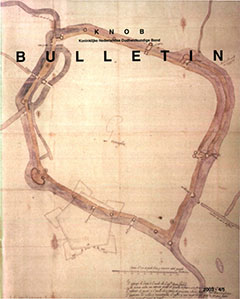
The eighteenth-century establishment of Dutch towns overseas is interesting because such town-planning matters were hardly an issue in the Netherlands itself at that time. For the then colony of Demerara (Guyana) in South America J.C. Heneman made an interesting design for a small town planned some distance upstream by the river of the same name.
His starting point was the existing structure of a plantation. The design reminds you of an ideal town of Simon Stevin. Just as in other West Indian colonies under the rule of the Dutch West India Company, decision-making was utterly slow. The little town was never realised.
On a narrow strip of land near the coast and situated by the riverbank a small town was started under the French government at the end of the eighteenth century, which later developed into Stabroek and eventually into Georgetown. A comparison with other colonial towns in the region of the WIC does not show any strong similarities.
Frequently a dominant axis was present; however, as appears from various examples, the reasons for this axis were very different and it had nothing to do with some sort of ideal for such a town, for such an ideal did not exist. In Georgetown the structure of the existing plantations in its turn determined the structure of the various parts of the town.